Ecuador Youth Pipeline Delivers Tactical Discipline for 2026 Group Stage
When Ecuador landed in Qatar for the 2022 World Cup, they carried a reputation as a tough, altitude-reliant side. Two years later, the narrative has shifted. The team that booked its ticket to the 2026 tournament in the United States, Canada, and Mexico is younger, more structured, and far less dependent on home advantage. With an average age of 23.4 across 18 qualifiers, Ecuador fielded the youngest squad in the CONMEBOL qualification cycle. That youth is not a gamble; it is a deliberate outcome of a development system centred on the Independiente del Valle academy, which has produced a generation of players who combine technical comfort with tactical discipline.
Ecuador's Qualification: More Than Just Altitude
Ecuador's path to 2026 was defined by defensive solidity. They conceded only eight goals in 18 matches, the best defensive record in the South American qualifiers after Argentina. That figure is all the more striking given the squad's inexperience: seven players who featured in the U20 World Cup in 2023 earned senior caps during the campaign. The old reliance on the altitude of Quito has been supplemented, and in some ways replaced, by a compact defensive structure that travels well. On the road, Ecuador conceded just five goals in nine qualifiers, drawing with Brazil in Brasília and holding Uruguay scoreless in Montevideo.
The qualification campaign also highlighted the squad's resilience. After a slow start—a 1-0 loss to Argentina in Buenos Aires—Ecuador went on a nine-match unbeaten run that included wins over Colombia and Chile. The spine of the team, anchored by Moises Caicedo and veteran striker Enner Valencia, provided stability, but the contributions of younger players like Kendry Páez and Willian Pacho were just as critical. Páez, then 16, became the youngest player to appear in a CONMEBOL qualifier, and his four assists were second-most on the team.
Ecuador's success also reflects a shift in the national team's talent pool. Of the 26 players most frequently used in qualifiers, 19 were based in Europe, a higher proportion than any previous Ecuador squad. This exposure to different tactical systems—from the Premier League to the Belgian Pro League—has accelerated the players' adaptability. Head coach Félix Sánchez Bas, who took over in 2023, has stressed the importance of a flexible approach, and the numbers back him up: Ecuador used three different formations in qualifiers, switching between a 4-4-2 block and a more aggressive 4-3-3 depending on the opponent. For instance, against Brazil's possession-heavy style, Ecuador employed a compact 4-4-2 that forced the hosts into wide crosses, while against Paraguay's direct approach, they shifted to a 4-3-3 to press higher up the pitch.
The Tactical Blueprint: Pressing and Transitions
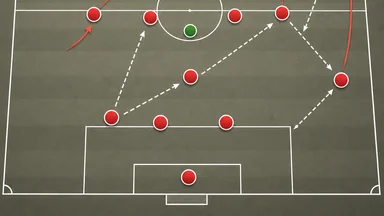
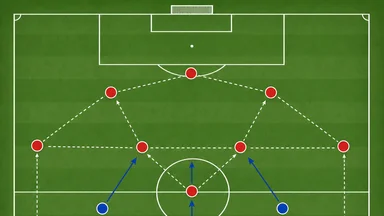
Ecuador's defensive structure is built around a high press that triggers as soon as the opponent's goalkeeper plays a short pass to a centre-back. The forwards, led by Valencia or Kevin Rodríguez, angle their runs to force the ball wide, where the full-backs—Pervis Estupiñán on the left and Angelo Preciado or José Hurtado on the right—push up to join the press. The midfield three, with Caicedo as the anchor, then shift across to close passing lanes. In qualifiers, Ecuador recovered the ball in the final third roughly 7.5 times per match, a rate that ranked third in the confederation.
Out of possession, Ecuador settles into a 4-4-2 mid-block, with the wide midfielders tucking in to protect the central channels. This shape is designed to funnel play into wide areas, where the full-backs can engage in 1v1 duels. The strategy paid off: opponents created only 0.76 expected goals per game against Ecuador, the second-lowest mark in the qualifiers. The discipline of the back four, marshalled by centre-backs Pacho and Félix Torres, ensures that the block rarely gets pulled out of shape.
In transition, Ecuador is dangerous. Caicedo averages roughly 12.3 ball recoveries per game, and his first instinct is to play forward. The team's quick vertical passes target the wing channels, where Estupiñán and the right winger combine to create overloads. Ecuador's transition plays typically involve three or fewer passes before a shot, and they scored nine goals from such sequences in qualifiers. The speed of this approach is a direct product of the academy system, where players are drilled in quick decision-making from an early age. However, this reliance on transitions carries a trade-off: when opponents sit deep and deny space in behind, Ecuador's attacking output can drop. In the qualifier against Argentina, for example, Ecuador managed only 0.4 expected goals, as the Argentine defence compressed the pitch and absorbed the transitions. This vulnerability suggests that Ecuador may need a secondary plan—such as increased possession-based buildup—against teams that defend in a low block.
Key Individuals: Caicedo, Páez, and the Spine
Moises Caicedo is the fulcrum. The Chelsea midfielder finished the qualifiers with an 89% pass accuracy, the highest among Ecuador's regular starters, and his 2.8 tackles per game led the team. But his value goes beyond numbers: he is the player who dictates the tempo, slowing the game when Ecuador needs to regain shape and accelerating when an opening appears. At 24, he is already one of the most experienced members of the squad, with over 40 caps. His ability to read the game is exemplified by his interceptions—he averaged 1.6 per qualifier—often cutting out passes before they reach the attacking third.
Kendry Páez, now 17 and preparing to join Chelsea in 2025, offers the creative spark. He operates between the lines, often drifting from the right half-space to receive the ball on the turn. His four assists in qualifiers came from a mix of set pieces and open play, and his willingness to take risks—he attempted 2.1 dribbles per game—gives Ecuador an element of unpredictability. The challenge for Sánchez Bas will be managing Páez's minutes in the group stage to avoid burnout. In the 2023 U20 World Cup, Páez played over 500 minutes in a month-long tournament, and his performance dipped in the latter stages, suggesting that his physical development requires careful monitoring.
At the back, Willian Pacho has emerged as one of the most promising left-footed centre-backs in world football. The 22-year-old, now at Paris Saint-Germain, won 75% of his aerial duels in qualifiers and averaged 4.3 clearances per game. His composure on the ball allows Ecuador to build from the back, and his recovery speed covers for the high defensive line. Alongside him, veteran Félix Torres brings experience, though his lack of pace against quick forwards is a potential vulnerability. Up front, Enner Valencia remains the talisman. At 35, he is unlikely to start every group game, but his 42 international goals—including two in the 2022 tournament—make him the squad's most reliable finisher. A counter-argument exists: Valencia's hold-up play has declined with age, and his pressing intensity is lower than that of younger alternatives like Kevin Rodríguez. Sánchez Bas may need to balance Valencia's finishing with the tactical demands of the high press, potentially using him as a second-half substitute against tiring defences.
Group Stage Opponents: Contrasting Styles
Ecuador's group presents a varied tactical challenge. The Netherlands, the likely top seed, favour a possession-heavy approach, with a press-resistant build-up that relies on centre-backs like Virgil van Dijk to play out under pressure. Ecuador's high press will be tested early: if the Dutch can bypass the first line, they have the quality to exploit space behind the midfield. The key battle will be Caicedo vs. Frenkie de Jong, with the Ecuadorian tasked with disrupting the Dutchman's ability to receive between the lines. A specific example from the qualifiers: when Ecuador faced Brazil, they successfully neutralised Casemiro's influence by having Caicedo shadow him, forcing Brazil to build through less comfortable passers. A similar plan could work against the Netherlands.
Senegal offers a different problem. The African champions are athletic, direct, and dangerous from set pieces—they averaged roughly 0.7 expected goals per game from dead-ball situations in their qualification campaign. Ecuador's defensive block will need to be alert to second balls and aerial duels, especially if Sadio Mané or Ismaïla Sarr isolate the full-backs. Senegal's physicality could trouble Ecuador's young centre-backs, particularly if Pacho is drawn out of position. The trade-off here is that Ecuador's full-backs, Estupiñán and Preciado, are both attack-minded; if they push forward, they leave space for Senegal's wingers to exploit on the counter. Sánchez Bas may need to instruct one full-back to stay deep, sacrificing attacking width for defensive solidity.
Qatar, the host nation, is the most manageable opponent on paper. The Maroons typically defend in a deep block and rely on counter-attacks through Almoez Ali. Ecuador's ability to break down a compact defence will be crucial, and this is where Páez's creativity and Estupiñán's crossing become vital. Historically, Ecuador has struggled against teams that sit deep, but their improved patience in possession—they averaged 54% ball possession in qualifiers—suggests they are better equipped than in previous cycles. However, a counter-argument is that Ecuador's possession stats were inflated by matches against weaker opponents like Bolivia and Venezuela; against organised defences like Argentina's, their possession dropped to 42%. Against Qatar, Ecuador must show they can retain the ball under pressure and create chances through sustained buildup, not just transitions.
Historical Context: Breaking the Second-Round Ceiling
Ecuador's best World Cup performance remains the Round of 16 in 2006, where they lost 1-0 to England on a David Beckham free kick. That squad, led by Agustín Delgado and Edison Méndez, was experienced and physical, but lacked the tactical sophistication of the current generation. In 2014, Ecuador exited in the group stage despite a win over Honduras, undone by a 3-0 loss to France. The 2022 campaign was similarly frustrating: a 2-0 loss to the Netherlands in the opening match left them playing catch-up, and they were eliminated after a 1-1 draw with Senegal.
This time, the squad has more European-based players than any previous Ecuador team, and the tactical education they have received abroad is evident. The current group also benefits from a clearer identity: the pressing system is consistent across matches, and the players understand their roles. However, the historical record is a reminder that potential does not guarantee progress. Ecuador has never won a knockout match at a World Cup, and the pressure of expectation could weigh on a young squad. The average age of the starting eleven in 2006 was 28; in 2026, it could be closer to 24. That youth brings energy but also inexperience in high-stakes moments. For example, in the 2022 group stage, Ecuador conceded a late equaliser to the Netherlands after a defensive lapse, a sign of the composure that comes with age. The current squad will need to show mental resilience to avoid similar mistakes.
Development System: Independiente del Valle's Legacy
Independiente del Valle's academy, founded in 2007, has transformed Ecuadorian football. The club's method emphasises small-sided games—4v2 rondos are a daily staple—and positional play, with young players exposed to 11v11 scenarios as early as age 12. The results are measurable: since 2015, the academy has generated roughly €150 million in transfer revenue from sales of players like Caicedo, Páez, Pacho, and others. The system is not just about individual talent; it instils a collective understanding of space and pressing that translates directly to the national team.
The academy's success has prompted other CONMEBOL federations to study its model. However, replicating it requires long-term investment and a willingness to prioritise development over immediate results. Ecuador's federation has committed to this path, and the current squad is the payoff. Seven of the 23 players used in the last qualifier came through the IDV system, and the club's influence extends to the coaching staff: Sánchez Bas previously worked with the youth setup at Barcelona's academy, but he has adapted his methods to fit the IDV ethos.
The challenge now is sustaining this production line. Scouts from European clubs are increasingly targeting IDV's U17 and U20 teams, and the risk is that the best talents leave before they have fully matured. Ecuador's federation has responded by integrating youth players into the senior setup earlier, as with Páez, but the balance between exposure and protection is delicate. If the academy can continue to produce two or three senior internationals per cycle, Ecuador's tactical foundation will remain solid for years to come. A specific example: the IDV U20 team that reached the 2023 Copa Libertadores U20 final produced five players who have since debuted for the senior national team, including centre-back Joel Ordóñez, who is now at Club Brugge. This pipeline ensures that the national team's tactical identity remains consistent across generations.
What Ecuador Must Execute to Advance
Winning the opening match against Qatar is the clearest path to progression. Ecuador's 2022 campaign showed how a defeat in the first game can derail momentum; a win would give the squad breathing room and put pressure on the Netherlands and Senegal. The team's set-piece output needs improvement—only two goals from corners in qualifiers, a weakness that could be exploited against organised defences. Sánchez Bas has worked on routines in training, but execution under tournament pressure is another matter. A trade-off exists: focusing on set-piece drills may reduce time spent on open-play patterns, but given the tight nature of group-stage matches, every marginal gain counts.
Discipline is a concern. Ecuador received three red cards in their last ten World Cup matches, and the young squad's emotional control will be tested, especially against Senegal's physical approach. Managing minutes for key players is also critical: Caicedo played over 2,700 minutes in the Premier League last season, and Páez is still physically developing. Fatigue could affect decision-making in the final third, where Ecuador's conversion rate was modest—they scored 18 goals from 14.2 xG in qualifiers, suggesting they created chances but were not always clinical. A counter-argument is that the xG figure underestimates the quality of chances against weaker opponents; against top teams, Ecuador's xG per shot was lower, indicating that finishing alone is not the issue, but rather the quality of chances created.
Finally, the heat and humidity of the North American venues will be a factor. Ecuador has used altitude simulation training in the past, and similar methods—such as heat chambers or early acclimatisation camps—could help players adapt. The squad's youth is an advantage here: younger players tend to recover faster. If Ecuador can navigate the group stage with tactical discipline and a bit of luck, they have the tools to finally break through to the quarter-finals. But as any Ecuadorian fan knows, the World Cup has a way of humbling even the most promising teams. The difference this time may be the depth of tactical understanding and the clear identity that the Independiente del Valle academy has instilled—a foundation that could carry Ecuador further than ever before.