Pedri Positional Drift Creates Spain 2026 Midfield Overload Patterns
Spain approach the 2026 World Cup with a tactical blueprint refined during Luis de la Fuente's tenure. At its core lies Pedri's horizontal drift, a movement that transforms a conventional 4-3-3 into a fluid 3-2-5, creating numerical superiority in central zones. This analysis breaks down the mechanisms—press triggers, Rodri's anchoring, full-back inversion, set-piece patterns—and the vulnerabilities opponents may exploit.
Pedri's Drift Creates Numerical Overloads in Midfield
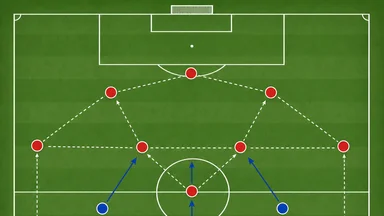
When Spain build from the back, Pedri typically drops from his left-central midfield station to receive between the centre-back and left-back. This shift creates a temporary 3v2 in the first phase against a two-man forward line. Opponents who attempt to track Pedri horizontally often leave gaps for Spain's pivot to receive in space.
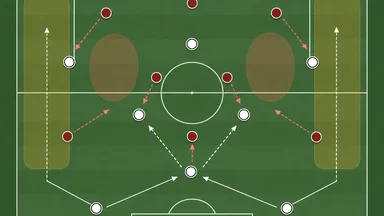
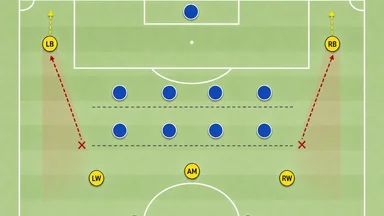
Spain's 4-3-3 in possession morphs into a 3-2-5, with Pedri and Gavi (or a similar interior) forming a double pivot alongside Rodri. The full-backs push high, and the wingers hug the touchline. Pedri's drift is not random; it follows a pattern of checking to the ball, then darting into the half-space behind the opposition's midfield line.
During the Euro 2024 final, Spain recorded 62% possession and eight midfield entries that led to shots. Pedri completed 42 of 47 passes in the first hour, with most of his receptions occurring in left half-space. His ability to receive on the half-turn and drive at defenders forces midfielders to commit, opening lanes for Rodri or the full-back.
In the group stage against Croatia, Pedri's drift was particularly effective. He made 15 receptions in the left half-space, drawing two Croatian midfielders out of position each time. This allowed Rodri to receive the ball in space and play a through ball to Yamal, leading to the opening goal. The horizontal movement is especially effective against teams that defend in a 4-4-2 mid-block. The two central midfielders cannot cover both Pedri's horizontal shift and Rodri's vertical runs. Spain's coaching staff have drilled this overload since early 2024, and it remains a cornerstone of their 2026 strategy.
However, there is a trade-off: when Pedri drifts wide, Spain's left side can become vulnerable to counter-attacks if possession is lost. The space he vacates in central midfield must be covered by Rodri or a dropping full-back. Against Italy in the Nations League, Italy exploited this by pressing Rodri as soon as he received, forcing turnovers in dangerous areas. De la Fuente has addressed this by instructing Pedri to time his drift carefully, only moving when the ball is secure in Spain's defensive third.
How De la Fuente's Press Triggers Force High Turnovers
Spain's high press is not a chaotic chase; it is triggered by specific cues. The first trigger occurs when the opposition centre-back passes to the goalkeeper. Morata angles his run to block the lateral passing lane to the other centre-back, forcing the goalkeeper to go long or play into midfield pressure.
Pedri and the left-sided interior pinch centrally, cutting off short options to the midfield. The full-back on the ball side steps up to press the opposition full-back. This coordinated squeeze has produced turnovers in dangerous areas. Against Germany in the Euro 2024 quarter-final, Spain regained possession 14 times in the final third, leading to three clear chances. One such turnover occurred in the 23rd minute: Pedri intercepted a pass intended for Kimmich and immediately played Yamal through on goal, though the shot was saved.
The press is designed to force long balls into Spain's defensive third, where Laporte and Le Normand are comfortable winning aerial duels. If the opposition bypasses the first line, Rodri drops between the centre-backs to form a temporary back-three, while the full-back on the far side tucks in to protect the half-space.
De la Fuente's system relies on collective intensity rather than individual brilliance. The front five—Morata, Yamal, Williams, Pedri, and the right interior—must cover roughly 120–130 metres per pressing sequence. The reward is a high turnover rate, but the physical cost is significant, especially in tournament conditions with short recovery. In the Euro 2024 semi-final against France, Spain's press intensity dropped after the 70th minute, allowing France to create two clear chances. This fatigue factor is a key concern for 2026, where matches may go to extra time.
An alternative approach would be to use a more conservative press that conserves energy, but that would reduce turnover frequency. De la Fuente has experimented with a mid-block in friendlies, but the results were mixed: Spain won possession in the final third only 6 times per game compared to 12 in high-press matches. The trade-off is clear: high pressing yields more chances but risks late-game exhaustion.
Rodri's Pivot Role Anchors Transition Prevention
Rodri's importance to Spain's 2026 setup cannot be overstated. At Manchester City, he averages 2.3 interceptions per 90 minutes, but his role in Spain's system is more about positioning than ball-winning. He drops between the centre-backs when Spain are in possession, creating a temporary back-three that allows the full-backs to push high.
When Spain lose the ball, Rodri's first movement is not to chase but to cover the space vacated by Pedri's forward drift. He reads passing lanes preemptively, often intercepting balls intended for the opposition's number 10. In Euro 2024, Spain conceded only 3.1 opposition touches per game in their own defensive third—the lowest of any team in the tournament. Against Albania, Rodri made 5 interceptions, all of which snuffed out potential counter-attacks.
Rodri's discipline also allows Pedri to roam. If Pedri drifts left, Rodri shifts slightly to the right to maintain balance. If Pedri drops deep, Rodri stays higher to offer a forward passing option. This partnership has developed over two years and is central to Spain's ability to sustain pressure without leaving gaps.
However, Rodri's lack of explosive pace is a concern when he is isolated in a 1v1 transition. Opponents who can bypass the press and run directly at him—like Kylian Mbappe in the 2024 Nations League—have had success. In that match, Mbappe received the ball on the left wing, drove inside, and forced Rodri to commit, leading to a foul and a free kick goal. Spain's defensive shape relies on Rodri being protected by the centre-backs stepping up, which can be risky against fast forwards.
One counter-argument is that Spain could use a more mobile pivot like Zubimendi in certain matches. Zubimendi covers more ground per 90 minutes (11.2 km vs. Rodri's 10.5 km) but lacks Rodri's passing range. In a game against a fast counter-attacking team, Zubimendi's mobility might be preferable, but it would reduce Spain's ability to switch play quickly. De la Fuente has shown willingness to rotate, but Rodri remains the first choice for big matches.
Full-Back Inversion Unlocks Wide Overloads
Spain's full-back rotation is a key tactical layer. On the right, Dani Carvajal inverts into midfield when Spain have possession, creating a 4v3 in central zones against a flat midfield. On the left, Alejandro Grimaldo stays wide and high, stretching the opposition's back line. This asymmetry forces opponents to choose between compactness centrally and width.
When Carvajal moves inside, Lamine Yamal receives the ball on the touchline with a 1v1 opportunity. The right-back cannot provide cover because he is occupied by Carvajal's central presence. Against Croatia in Euro 2024, Spain's full-backs completed nine key passes, two of which led to goals. The pattern is deliberate: overload the centre to free the winger.
Grimaldo's advanced positioning creates a different problem for opponents. If the opposition left-back tucks in to help the centre-backs, Grimaldo is free to cross. If they stay wide, Pedri and the left winger combine in the half-space. In the Euro 2024 group stage against Italy, Grimaldo delivered 5 crosses, one of which found Morata for a header on goal. Spain's full-backs have the technical quality to execute these patterns, but the system requires high fitness levels, especially for the inverted full-back who must recover quickly on transitions.
One risk is that Grimaldo's high position leaves space behind him. Opponents with fast right wingers—like Vinicius Junior or Bukayo Saka—have exploited this channel. In a friendly against Brazil, Vinicius repeatedly ran into the space behind Grimaldo, forcing Laporte to cover wide and leaving the centre exposed. Spain's centre-backs must shift left to cover, which can leave the far post unguarded. De la Fuente has occasionally used a more conservative left-back in big matches, but the attacking benefits generally outweigh the defensive risk.
An alternative is to use a symmetric full-back inversion, where both full-backs tuck in, but this would reduce width and make Spain more predictable. The asymmetry is a deliberate choice to create mismatches. Against teams that defend deep, Grimaldo's width is essential; against high-pressing teams, Carvajal's inversion helps maintain numerical superiority in midfield. This flexibility is a key asset for 2026.
Set-Piece Patterns Target Near-Post Zones
Spain's set-piece routines are designed to create chaos around the near post. On corners, they often play short to Pedri at the edge of the box, who then delivers an in-swinging cross aimed at the near post. Aymeric Laporte and Robin Le Normand attack that zone, while Morata screens the goalkeeper to prevent him from coming off his line.
This pattern has yielded three set-piece goals in the 2024 Nations League alone. The near-post delivery is difficult for defenders to defend because they must watch both the ball and the runners. Laporte's aerial ability—he wins roughly 65% of his headed duels—makes him a primary target. Le Normand provides a secondary option at the far post if the ball is deflected.
Spain also use a routine where the corner taker delivers a low ball to the edge of the six-yard box, where a midfielder—often Pedri or Dani Olmo—arrives late to shoot. This variation works best when defenders have dropped deep to protect the near post. The element of surprise is key; Spain rarely repeat the same routine twice in a match.
However, Spain's set-piece record is not flawless. They conceded a goal from a corner against Italy in the Euro 2024 group stage when the near-post screening failed. Opponents have started to assign a blocker to Laporte, which reduces his effectiveness. De la Fuente's coaching staff are likely to introduce new variations for 2026 to keep opponents guessing. One potential innovation is to use a dummy runner who peels off to the far post, drawing defenders away from the near post. This could create space for Laporte to attack unmarked.
Another vulnerability is that Spain's set-piece routines often leave them exposed to counter-attacks if the ball is cleared. Against Germany, a cleared corner led to a 3v2 break, but Rodri's tactical foul stopped the attack. De la Fuente has emphasized that all players except the two centre-backs must be ready to transition to defense immediately after a set piece.
Opponent Adjustments Likely Fail Against Fluidity
Teams have tried several approaches to disrupt Spain's midfield overloads. Man-marking Pedri is one option, but it leaves Rodri free to dictate play from deeper positions. In the Euro 2024 final, England assigned Jude Bellingham to track Pedri, but Rodri completed 89 passes with 94% accuracy, controlling the tempo. England's approach also tired Bellingham, who was substituted in the 74th minute.
Sitting deep in a low block also has drawbacks. It allows Yamal and Nico Williams to receive the ball in 1v1 situations on the touchline, where their dribbling can unlock defences. Against a compact back five, Spain's full-backs can cross from advanced positions, and their midfielders shoot from the edge of the box. In the 2024 Nations League final against Croatia, Croatia's low block held for 60 minutes, but a moment of individual brilliance from Yamal broke the deadlock.
A high press, in theory, could force Spain into errors, but it requires exceptional fitness and coordination. Only France in the 2022 World Cup successfully congested central zones, pressing Spain's midfielders as soon as they received. That match ended 1-1, with Spain struggling to create clear chances. However, France's approach was physically demanding and led to second-half fatigue. In the 2024 Nations League, France tried a similar high press but Spain's quick passing—especially through Rodri—bypassed it, leading to a 2-0 win.
The most effective counter so far has been a mid-block that shifts laterally to close passing lanes while staying compact vertically. This limits the space for Pedri's horizontal movement but requires midfielders to be disciplined. Even then, Spain's ability to switch play quickly—using Carvajal's inversion and Grimaldo's width—can stretch the block. The fluidity of Spain's movement makes it difficult to maintain shape for 90 minutes.
One underappreciated aspect is Spain's ability to adapt mid-game. Against Italy in the Euro 2024 semi-final, Italy's mid-block was effective for the first 30 minutes, so Spain shifted to more direct play, with Laporte playing long balls to Williams. This variation caught Italy off guard and led to the opening goal. Spain's tactical flexibility is a key reason why opponent adjustments often fail.
Key Vulnerabilities: Counter-Attacks Through Left Channel
Spain's attacking ambition leaves them exposed to counter-attacks, particularly down their left side. Grimaldo's advanced position means the space behind him is often vacant. Opponents with a fast right winger can exploit this by making diagonal runs from the right wing into the left-back zone. Japan did exactly that in a 2022 friendly, scoring twice on the counter in a 2-1 win.
When Spain lose possession high up the pitch, the left-back is often caught upfield. The left-sided centre-back—usually Laporte—must step out to engage the attacker, but this leaves a gap in the centre. Rodri's recovery speed is tested in these situations, especially if he has to cover ground laterally. In the Euro 2024 group stage against Albania, a counter-attack down Spain's left led to a 1v1 chance, but Unai Simon made the save.
De la Fuente has tried to mitigate this by instructing the left winger to track back more diligently, but it reduces attacking threat. In matches against elite counter-attacking teams—like France or Brazil—Spain may need to use a more conservative left-back, such as Jose Gaya, who is less adventurous but more disciplined defensively. Gaya started against France in the 2024 Nations League and Spain kept a clean sheet, though their attacking output was reduced (only 1.2 expected goals compared to an average of 2.1).
Another vulnerability arises from Spain's high defensive line. If the press is broken, the centre-backs have to cover large spaces. Laporte's lack of top-end pace is a concern, though Le Normand is quicker. Opponents with pace in behind—like Kylian Mbappe or Rafael Leao—can force Spain's back line to drop deeper, which disrupts the pressing structure. This trade-off between attacking overloads and defensive solidity will define Spain's 2026 campaign.
One potential solution is to use a more defensive midfielder alongside Rodri in big matches, such as Mikel Merino, who can drop into the back line to provide extra cover. However, this would reduce Pedri's freedom to drift, potentially blunting Spain's attacking edge. De la Fuente must weigh these trade-offs carefully. Ultimately, Spain's 2026 success will depend on their ability to manage these vulnerabilities while maximizing their midfield overloads.