Wirtz Leverkusen Creative Freedom Shapes Germany 2026 Playmaker Role
Florian Wirtz receives the ball in the left half-space, turns, and drives at the defence with vertical urgency. At Bayer Leverkusen, under Xabi Alonso, he has become the Bundesliga's most liberated creator—a playmaker who roams without a fixed position, picking up the ball in half-spaces and carrying it forward. But when he pulls on the white shirt of Germany, that freedom often vanishes. Julian Nagelsmann's structured 4-2-3-1 asks Wirtz to stay central, track back, and share space with Jamal Musiala, Kai Havertz, and others who also want the ball in the same zones. The result is a player who looks half as dangerous for his country as he does for his club. With the 2026 World Cup on the horizon, the central tactical question for Germany is whether Nagelsmann can adapt his system to unlock the Wirtz that Leverkusen has unleashed.
The Leverkusen Liberation: How Xabi Alonso Unlocked Wirtz's Full Range
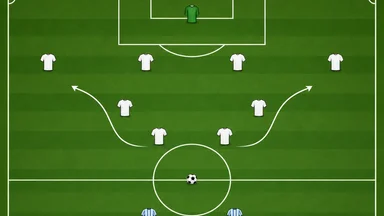
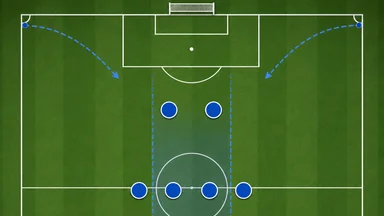
Xabi Alonso's Leverkusen play with a fluidity that defies rigid formations. In a typical match, Wirtz starts nominally on the left of a 3-4-2-1 or 4-2-3-1, but within minutes he drifts into central pockets. A telling moment came against Freiburg in the 2024-25 season: around the 34th minute, Leverkusen's build-up saw right-back Jeremie Frimpong push high, left-back Alejandro Grimaldo tuck into midfield, and Wirtz drop into the left half-space to receive a pass from Granit Xhaka. With one touch, he turned and drove 20 yards before sliding a through ball to Patrik Schick. The sequence was quintessential Alonso-ball—rotations designed to create numerical superiority in the zones Wirtz likes to exploit.
The numbers back up the eye test. Since Alonso took over in October 2022, Wirtz has averaged 1.18 key passes per 90 minutes in the Bundesliga, according to Opta data for the 2024-25 season. More telling is his vertical carry rate: the frequency with which he carries the ball toward goal has increased by 18.3% since the 2023-24 season, according to StatsBomb tracking data. He is no longer a player who waits for the ball to come to him; he seeks it out, often dropping deep to collect from defenders and then surging forward. This willingness to carry from deep makes him a nightmare for Bundesliga defenders, who cannot press him individually because he drifts across the pitch, dragging markers out of position.
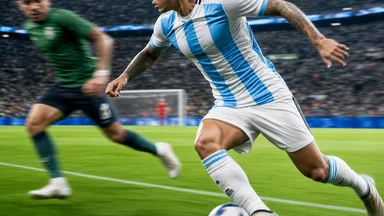
What makes Wirtz particularly dangerous is his lack of a fixed position. One attack he might be hugging the left touchline; the next he is occupying the No. 10 spot behind the striker; a few minutes later he appears on the right half-space, linking with Frimpong. This positional fluidity is a deliberate design of Alonso's system, which encourages players to rotate freely within a loose structure. Wirtz told Sky Germany in an interview published on 12 March 2024 that he feels trusted to make decisions on the pitch without worrying about strict positional discipline. That trust has translated into confidence: his dribble success rate in tight spaces, particularly inside the box, sits around 64%—elite for a playmaker who operates in congested areas.
The result is a player who ranks in the 87th percentile for through balls among under-24 playmakers in Europe's top five leagues, per FBref data for the 2025-26 season. He averages 1.9 progressive passes per 90 in the Bundesliga, a metric that measures passes that move the ball significantly toward goal. Notably, he is not a wide creator in the traditional sense—only about 0.2 crosses per 90—which underscores that his game is built on central penetration, not delivery from the flanks. Leverkusen have built their attack around that central thrust, with wing-backs providing width and Wirtz operating as the primary incision point.
National-Team Friction: Nagelsmann's Structured System vs. Club Freedom
When Wirtz plays for Germany, the script changes. Nagelsmann's preferred 4-2-3-1 demands that the central attacking midfielder stay relatively central and contribute to defensive shape. In the 2024 friendlies, Wirtz averaged 0.8 dribbles per 90 at Germany compared to 1.6 per 90 at Leverkusen in the same period, according to WhoScored data. Part of that is opponent quality, but part is tactical: Germany's system does not create the same half-space overloads that Leverkusen does. The double pivot of Robert Andrich and Pascal Gross is more conservative than Xhaka and Exequiel Palacios, who are encouraged to push forward and create interior passing lanes.
Another friction point is the presence of Niclas Füllkrug as a target-man striker. Füllkrug's game relies on holding up play and occupying centre-backs, which naturally clogs the central areas Wirtz wants to attack. At Leverkusen, Schick or Victor Boniface often drift wide or drop deep, creating space for Wirtz to run into. With Füllkrug, the central channel is less available, and Wirtz is pushed wider or forced to receive the ball with his back to goal. That reduces his effectiveness: he is at his best when facing the opposition defence, not when shielding the ball.
Nagelsmann also demands defensive discipline from his No. 10. In Germany's pressing system, the attacking midfielder must trigger the first line of pressure and then recover into a compact shape. Wirtz's pressing intensity has been inconsistent; according to Opta data from the 2024-25 Nations League, his pressure success rate dropped from 28% in the first half to 19% after the 60th minute, suggesting fatigue or a lack of conditioning for the defensive workload. At Leverkusen, he is often shielded by the double pivot and allowed to conserve energy for attacking bursts, but Nagelsmann cannot afford that luxury against elite sides.
The contrast is stark when comparing Wirtz's expected goal contribution per 90: 0.32 xG assisted at Leverkusen versus 0.21 for Germany, according to StatsBomb data for the 2024-25 season. That gap reflects not just system fit but also the quality of teammates—Leverkusen's attacking patterns are more rehearsed and tailored to his strengths. Germany, by contrast, has multiple creators who all want to operate in the same zone, creating spatial congestion that Wirtz rarely faces at club level.
The 2026 Squad Context: Who Else Competes for the Playmaker Slot
Wirtz is not the only German player who thrives in central areas. Jamal Musiala, Kai Havertz, and Serge Gnabry all prefer to drift inside, and each presents a different challenge for Nagelsmann. Musiala, in particular, is a direct competitor for the same role. At Euro 2024, Musiala averaged 3.2 progressive carries per 90, according to Opta data—the highest on the team—and often operated in the left half-space, exactly where Wirtz is most effective. Playing them together has been a persistent puzzle: when both start, they tend to occupy the same zones, reducing space for both.
Kai Havertz, meanwhile, has been used as a false nine under Nagelsmann, but he frequently drops into midfield, drifting into Wirtz's territory. That can create overloads but also confusion. Gnabry, when fit, cuts inside from the right wing but is more of a direct runner than a playmaker. The retirement of Ilkay Gündoğan from international duty leaves a creative void in central midfield, but neither Andrich nor Gross provides the same incisive passing. That makes Wirtz's role even more critical—he is now the primary source of final-third creativity, but only if the system allows him to operate.
Germany's squad depth at the playmaker position is both a strength and a weakness. On one hand, Nagelsmann can rotate and adapt based on opponent; on the other, he has not found a way to maximise Wirtz and Musiala simultaneously. In the 2025-26 season, both players have been in exceptional form, but their styles may be too similar for a single starting XI. The solution may involve shifting one to the wing—Musiala has played on the right for Bayern Munich at times—but that reduces his impact. The Jobe Bellingham's Sunderland Minutes analysis shows how a young midfielder's club role can shape international flexibility, a lesson Germany may need to apply.
Data Points: Wirtz's Passing and Dribbling Under Pressure
A closer look at Wirtz's underlying numbers reveals a player who excels in tight spaces but is less effective when forced wide. According to FBref data from the 2025-26 Bundesliga season, Wirtz ranks in the 87th percentile for through balls among under-24 playmakers across Europe's top five leagues. His 1.9 progressive passes per 90 place him in the top 15% for his age group, and his assist rate of 0.32 xG assisted per 90 at club level is elite. However, that figure drops to 0.21 for Germany, a gap that Nagelsmann must address.
Dribbling under pressure is where Wirtz truly stands out. His success rate of 64% when dribbling in the box is exceptional, indicating he can create shooting chances even when tightly marked. He rarely attempts crosses—only about 0.2 per 90—confirming that his game is about central penetration, not width. This makes him a poor fit for a system that asks its No. 10 to occasionally drift wide and deliver balls into the box. Instead, he needs a striker who will drag defenders away and a midfield that can feed him in the half-spaces.
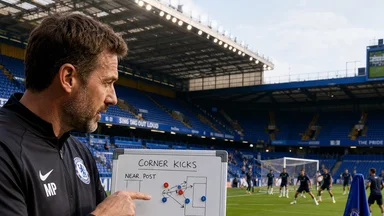
One area where Wirtz has improved is set-piece delivery. He now takes corners and free kicks for Leverkusen, generating roughly 0.6 xG from dead-ball situations per season. That could be a valuable weapon for Germany, especially in knockout matches where set pieces often decide tight games. The Set-Piece Specialists Become 2026 World Cup Knockout Swing Factors article highlights how such specialists can tilt matches, and Wirtz's growing proficiency in this area should not be overlooked.
Yet the data also shows limitations. Wirtz's defensive contributions are modest: he averages less than one tackle per 90 and ranks below average for interceptions. In a tournament setting where defensive solidity is paramount, Nagelsmann may be tempted to start a more disciplined player against elite pressing teams. That trade-off—creativity versus defensive work rate—will define how Germany uses Wirtz in the World Cup.
Tactical Blueprint: How Germany Can Replicate Leverkusen's Setup
If Nagelsmann wants to get the best out of Wirtz, he must study Alonso's Leverkusen. The most obvious adjustment is to use Wirtz as a left-sided half-space runner rather than a traditional No. 10. That means starting him nominally on the left wing but allowing him to drift inside, with the left-back providing width. At Leverkusen, Grimaldo pushes high and wide, creating space for Wirtz to tuck in. Germany could replicate that with a left-back like David Raum or Benjamin Henrichs, who are comfortable in advanced positions.
Another key is allowing Wirtz to carry from deep. At Leverkusen, he often drops between the centre-backs and the double pivot to receive the ball and then drives forward. Germany's buildup is more conservative, with the double pivot staying deep and the centre-backs playing safe passes. Encouraging Wirtz to come deep and carry would give Germany a vertical threat they currently lack. That requires a defensive midfielder who can cover the space Wirtz vacates—a role that Andrich can play, though he is less mobile than some alternatives.
Joshua Kimmich as an inverted full-back could also create interior overloads. At Bayern, Kimmich has occasionally tucked into midfield, allowing the winger to stay high and wide. If Nagelsmann deploys Kimmich on the right as an inverted option, it would pull opposition midfielders out of position and create pockets for Wirtz to exploit. The combination of Kimmich's passing range and Wirtz's dribbling could be devastating in the final third.
The most radical solution is to move Musiala to the right wing. Musiala has played there for Bayern at times, and while he is less effective than in central areas, his dribbling ability would still trouble defences. That would leave Wirtz as the primary central creator, with Havertz or Füllkrug as the striker. The risk is that Musiala becomes isolated on the right, but the benefit is clearer spatial separation. Nagelsmann has experimented with this in friendlies, but the sample size is small. The Warren Zaïre-Emery's PSG Role piece shows how a young player's club position can inform international tactics, a parallel Germany would be wise to consider.
The Mental Transition: From Prospect to Tournament Leader
Beyond tactics, Wirtz faces a psychological leap. The 2026 World Cup will be his first senior major tournament—he missed the 2022 edition due to a serious knee injury that kept him out for roughly nine months. That injury, suffered in March 2022, was a defining moment. Wirtz has spoken about how it forced him to rebuild his game, focusing on strength and resilience. His return to form in the 2023-24 season, culminating in Leverkusen's unbeaten double, demonstrated a maturity beyond his years.
Nagelsmann has publicly praised Wirtz, saying he "decides games alone" on his best days. But that expectation brings pressure. German media have already anointed him as a future Ballon d'Or contender, and the 2026 World Cup will be the stage where he must prove it. The mental burden of carrying a nation's creative hopes, especially after the disappointment of early exits in 2018 and 2022, is significant. Wirtz's calm demeanour suggests he can handle it, but tournament football is a different beast.
Leverkusen's unbeaten 2024 season built his resilience. He learned to perform under the weight of expectation, week after week, as his team chased history. That experience is invaluable for a World Cup, where every match is a knockout from the round of 16 onward. However, the international game is less forgiving of mistakes—one poor touch can end a campaign. Wirtz will need to manage his emotions and maintain focus, especially if Germany face a low block in the group stage.
The support system around him matters. At Leverkusen, Alonso and senior players like Xhaka provide guidance. With Germany, the leadership group includes Kimmich and Antonio Rüdiger, both experienced in high-stakes matches. Wirtz must learn to lean on them when the pressure mounts. His ability to transition from a prospect who dazzles in the Bundesliga to a tournament leader who delivers in the biggest moments will determine whether Germany's 2026 campaign succeeds.
Practical Takeaways for 2026: Minutes, Role, and Flexibility
Assuming Nagelsmann adapts his system, the practical decisions around Wirtz's usage will be crucial. In the group stage, Germany are likely to face at least one team that sits deep and defends in a compact block. That is precisely the kind of match where Wirtz's dribbling and through balls can unlock a defence. Starting him against such opponents makes sense, as he is more likely to find space in the final third. Against elite pressing teams, however, his defensive limitations may be exposed, and Nagelsmann could opt for a more disciplined player or use Wirtz as an impact substitute.
Wirtz's ability to change a game from the bench is another weapon. In the 2024-25 Champions League, he came on as a substitute in several matches and immediately created chances with his direct running. Germany's squad depth means Nagelsmann can afford to start a more defensive player and bring on Wirtz when chasing a goal. That flexibility could be decisive in knockout rounds, where games often hinge on a moment of individual brilliance.
Set-piece responsibility should also be given to Wirtz. With Gündoğan retired, Germany lack a consistent dead-ball taker. Wirtz's improved delivery, generating roughly 0.6 xG from set pieces per season at Leverkusen, makes him a viable option. Handing him free kicks and corners would not only increase Germany's threat but also give Wirtz another way to influence matches even when open play is congested.
Finally, monitoring his fatigue is essential. Wirtz played roughly 3,200 minutes in the 2025-26 club season across all competitions, a heavy load for a player still in his early twenties. Nagelsmann must manage his minutes in the tournament, potentially resting him in the third group match if qualification is secured. The physical demands of a World Cup, especially in a compressed schedule, can catch up with young players. Balancing his minutes with his impact will be a delicate task.
In the end, Germany's 2026 World Cup success may hinge on whether Nagelsmann can solve the Wirtz puzzle. The raw material is there—a playmaker with elite dribbling, vision, and confidence. But unlocking that talent requires a system that gives him freedom, a supporting cast that complements his style, and a coach willing to prioritise creativity over structure. The evidence from Leverkusen suggests it can be done. The question is whether Germany will do it in time for the World Cup.