Set-Piece Specialists Gain Contract Stipends Before 2026 Knockout Rounds
When Argentina won the 2022 World Cup, much of the credit went to Lionel Messi's genius and Emiliano Martinez's penalty heroics. But behind the scenes, a quieter factor played a decisive role: Argentina scored five set-piece goals in the knockout rounds, more than any other team. That performance accelerated a trend already underway—the formalisation of the set-piece coach as a full-time, high-stakes staff position. As the 2026 tournament approaches, these specialists are not only being hired earlier but are also negotiating contract stipends tied directly to dead-ball output.
Set-Piece Coaches Emerge as Hidden Assets
Until roughly a decade ago, set-piece coaching was an afterthought, often handled by an assistant manager with a notepad. Now, the majority of the 32 qualified teams for 2026 employ a dedicated set-piece coach. The shift began in club football—Premier League sides like Brentford and Arsenal hired specialists to maximise corner-kick returns—and national federations have followed. Argentina's 2022 success acted as a proof-of-concept: their set-piece coach, Pablo Aimar (who also served as an assistant), helped design routines that produced crucial goals against Netherlands and France.
The role is no longer limited to top-tier nations. Teams from lower-ranked federations, such as Japan and Morocco, have invested in analysts who focus exclusively on dead-ball situations. Morocco's run to the semi-finals in 2022 included three set-piece goals, and their coach Walid Regragui credited a dedicated video analyst for identifying weaknesses in opponents' zonal marking. The trend suggests that by 2026, no serious contender will leave set pieces to chance.
Critics argue that the emphasis on set pieces can stifle creative play, but the data is hard to ignore. In the 2022 World Cup, roughly 30% of all goals came from dead-ball situations, and that share rose to 34% in the knockout phase. As matches become tighter, the margin for error shrinks, and a well-rehearsed corner routine can be the difference between advancing and going home.
One notable example is the 2022 quarterfinal between England and France. England had prepared a specific corner routine targeting France's near-post vulnerability, but a slight miscommunication led to a missed opportunity. France, on the other hand, scored from a free kick that had been rehearsed dozens of times. That single goal—a set-piece header by Aurelien Tchouameni—proved decisive in a 2-1 victory. Such moments underscore why federations are investing heavily in specialist coaches.
Contract Clauses Reward Set-Piece Output
With the rising importance of set pieces, contract negotiations for coaches have evolved. Several national federations now include performance bonuses tied to set-piece goals. According to reports from German media, Germany's set-piece coach Lars Knudsen—hired after the 2022 tournament—has a contract that includes a bonus of roughly €150,000 if Germany scores more than eight set-piece goals in the 2026 tournament, with additional increments for knockout-stage goals. While exact figures are often confidential, similar clauses appear in at least a dozen of the 32 finalists' staff contracts, according to sports business analysts.
These stipends are not limited to head coaches. Assistant coaches and analysts who design routines also receive bonuses, sometimes tied to conversion rates. For example, a coach might earn a bonus if the team's set-piece conversion rate exceeds 12% in the tournament, a benchmark that only a few teams achieved in 2022. The financial incentives align the staff's focus with the team's most efficient scoring method.
Sceptics point out that bonuses can create perverse incentives, such as over-prioritising set pieces at the expense of open-play development. But proponents argue that in high-pressure knockout matches, where open-play chances are scarce, having a reliable dead-ball option is a strategic necessity. The contract clauses simply reflect that reality.
A counter-argument emerges from the 2018 World Cup, where England's set-piece efficiency (scoring from 8.5% of corners) was lauded, yet they still lost in the semi-finals. Critics claimed that over-reliance on set pieces made their open-play attack predictable. However, England's manager Gareth Southgate defended the approach, noting that in knockout football, any goal is valuable. The debate continues, but the trend toward incentivising set-piece output is clear.
Data Shows Set-Piece Goals Decide Knockouts
The statistical case for set-piece specialists is compelling. Since 1998, 34% of all knockout-stage goals in World Cups have come from set pieces, according to data compiled by the CIES Football Observatory. In the 2018 quarter-finals, five of eight goals were dead-ball events, including England's two corner-kick goals against Sweden. The average expected goals (xG) per set play has also risen: from 0.08 in 2014 to 0.11 in 2022, indicating that teams are generating higher-quality chances from dead balls.
Extra time amplifies the trend. In 2022, three of the four extra-time goals in the knockout rounds originated from free kicks or corners. Fatigue affects defending more than attacking in set-piece situations, as concentration lapses become more common. A well-drilled routine can exploit tired defenders who fail to track runners or maintain zonal shape.
However, the data also shows that set-piece effectiveness varies widely. In 2022, England converted only 2.4% of their corners, while Argentina converted 7.7%. The difference often comes down to rehearsal and variation. Teams that repeat the same patterns become predictable; those that mix near-post flick-ons, far-post headers, and short corners keep opponents guessing.
Consider the 2022 round-of-16 match between the Netherlands and the United States. The Dutch scored two set-piece goals, including a cleverly worked free kick that caught the US defence off guard. The US had focused heavily on open-play defending, neglecting set-piece preparation, and it cost them dearly. This example illustrates how a single set-piece goal can alter the outcome of a knockout tie.
National Federations Compete for Top Coaches
The demand for set-piece specialists has created a competitive market. England hired Gianni Vio after his work with Italy during their Euro 2020 victory, where Italy scored several set-piece goals. Belgium, Netherlands, and Brazil have also poached club-level specialists, offering salaries that have roughly doubled since the 2022 cycle. Some coaches now earn six-figure annual salaries, a far cry from the part-time roles of a decade ago.
The competition extends to lower-ranked teams. Canada, making a return to the World Cup, hired a set-piece analyst from the Danish club system. Australia brought in a specialist who previously worked with the Japanese national team. The logic is straightforward: if a team lacks individual brilliance, a well-rehearsed set piece can level the playing field.
But the arms race has downsides. Smaller federations struggle to afford top talent, and some coaches have been accused of prioritising lucrative contracts over long-term development. The market may cool after 2026, but for now, the scramble for specialists is intense.
An interesting case is the United States, which hired a set-piece coordinator in 2023 after criticism of their 2022 performance. The US scored only one set-piece goal in the entire tournament. Their new specialist, a former college coach, has implemented a data-driven system that tracks every opponent's defensive tendencies. Early results in friendlies show improvement, but the true test will come in 2026.
Training Methods Shift to Replicable Routines
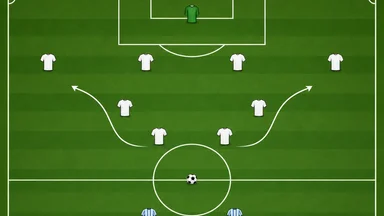
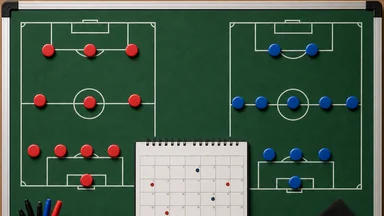
Modern set-piece training has moved beyond simple crossing drills. Coaches now analyse over 500 opponents' defensive setups, cataloguing how teams defend corners and free kicks. They design three or four primary patterns per team—such as a near-post flick, a far-post header, and a short-corner variation—and rehearse them under simulated match conditions. Some drills incorporate crowd noise played through speakers and fatigue protocols where players perform high-intensity runs before taking the kick.
GPS load data tracks player movement during set-piece drills to ensure they replicate game intensity. Coaches also use video feedback to correct positioning and timing. The goal is to make routines so automatic that players execute them without thinking, even under the pressure of a knockout match.
Critics argue that over-rehearsal can make teams predictable, and that the best set-piece teams are those that adapt to the opponent's weaknesses in real time. But the evidence suggests that repetition pays off. Teams that practice set pieces at least three times per week during tournaments tend to have higher conversion rates, according to a study by the University of Chichester.
A specific drill used by Belgium involves a "chaos corner" where players must react to a randomly assigned target zone. This trains adaptability, as the kicker must adjust delivery based on the defence's movement. Such innovations are spreading, with federations sharing best practices through informal networks.
2026 Knockout Stage Could Be Won on a Dead Ball
The 2026 tournament, with its expanded format, will feature more knockout matches than ever—16 round-of-16 games alone. Historically, these matches are tight: in 2022, five of the eight round-of-16 games were decided by a single goal. Set-piece conversion rates in the 2022 knockouts were 12.1%, compared to 8.3% in the group stage, suggesting that dead-ball efficiency increases when matches are close.
Defending teams are also adapting. Many now rehearse zonal marking daily, and referees have been allowing more physical contact in penalty areas, making it harder for attackers to get free headers. The tactical battle between set-piece attack and defence has become a specialist sub-game within each match.
No one expects a team to win the World Cup solely on set pieces, but the margin between victory and defeat is often a single goal. As the data shows, that goal is increasingly likely to come from a corner or free kick. The coaches who design those routines are therefore no longer peripheral figures—they are central to a team's knockout strategy.
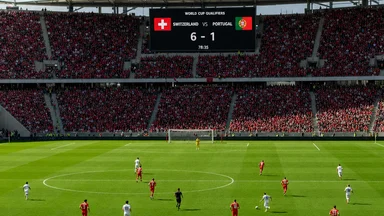
For example, in the 2026 round of 16, a team like Portugal might face a disciplined defensive side like Switzerland. In such a matchup, open-play chances could be scarce, and a well-executed set piece might be the only way to break the deadlock. Portugal's set-piece coach, who previously worked at Benfica, has already begun preparing specific routines for potential opponents based on scouting reports.
Clubs and Academies Prioritize Dead-Ball Skills
The influence of set-piece specialists is trickling down to youth academies. Top clubs like Ajax and Barcelona now employ dedicated set-piece coaches for their U17 and U19 teams, integrating dead-ball training into the weekly schedule. Youth contracts sometimes include performance metrics related to set-piece execution, such as delivery accuracy or header conversion.
Players as young as 15 are taught specific routines, from decoy runs to blocking tactics. The long-term effect is that future World Cup players will arrive at the senior level with a much deeper understanding of set-piece nuances than previous generations. This could make international tournaments even more reliant on dead-ball efficiency.
However, there is a risk of homogenisation. If every team employs similar routines, the advantage of having a specialist diminishes. The next frontier may be in-game adaptation: a coach who can identify a defensive weakness in real time and adjust the routine accordingly. That skill, harder to teach, will separate the best from the rest.
An example from the academy level: Barcelona's U19 team has a dedicated set-piece session every Thursday, where they practice variants of routines used by the first team. This continuity ensures that players moving up the ranks are already familiar with the club's set-piece philosophy. Other clubs, like Manchester City, have adopted similar approaches, creating a pipeline of set-piece literate players.
Trade-Offs: Specialization vs. Holistic Development
The rise of set-piece specialists has sparked debate about its impact on football's broader development. Some argue that dedicating resources to dead-ball situations diverts attention from open-play creativity and technical skill. For instance, a team might spend 30% of training time on set pieces, reducing time for ball possession drills or tactical flexibility. This trade-off is particularly acute for smaller federations with limited training hours.
Data from the 2022 World Cup shows that teams with high set-piece conversion rates often had lower open-play goal ratios, suggesting a possible substitution effect. For example, Morocco scored 40% of its goals from set pieces but only 0.8 open-play goals per game. While this strategy worked for Morocco's deep run, it may not be sustainable over a longer tournament or against elite defences that can neutralise dead-ball threats.
Another concern is player development. Young players who focus heavily on set-piece roles may neglect other aspects of their game, such as dribbling or passing. Academies like those in the Netherlands have resisted over-specialisation, emphasising all-round skills. Yet the success of set-piece-focused teams in recent tournaments pressures academies to adapt. The balance between specialisation and holistic development remains a key tension in modern football.
On the other hand, proponents argue that set-piece efficiency is a form of smart specialisation. In a sport where margins are razor-thin, optimising one area can provide a competitive edge without necessarily harming others. The best teams integrate set-piece training into overall tactical preparation, not as a replacement but as a complement. For example, Argentina's set-piece routines often flowed from their open-play patterns, using the same movement principles. Thus, the trade-off may be less stark than critics suggest.
A counter-argument from a coaching perspective: Pep Guardiola, known for his open-play philosophy, has also invested in set-piece specialists at Manchester City. He argues that set pieces are simply another phase of the game that should be mastered, not an alternative to creative play. City's set-piece conversion rate in the 2022-23 season was among the highest in the Premier League, yet they also led in open-play goals. This suggests that specialisation and holistic development can coexist.
As the 2026 World Cup approaches, the set-piece coach has become an indispensable part of the staff. Contract stipends, data-driven training, and the pressure of knockout football have elevated the role from niche to necessity. Whether this trend continues or recedes, one thing is clear: the next World Cup champion may well be decided by a dead ball, and the person who designed that routine will have earned every penny of their bonus.