South Korea Player Pool Overhaul After 2022 Exit Targets 2026 Depth
When the final whistle blew at Stadium 974 in Doha on December 5, 2022, the scoreboard read Brazil 4-1 South Korea. Brazil had eased off after going 4-0 up inside 36 minutes. For South Korea, the round-of-16 exit was not a surprise—they had qualified from a group containing Portugal and Uruguay—but the manner of defeat laid bare specific problems: a lack of pace in central defense, a midfield that struggled to progress the ball under pressure, and an over-reliance on Son Heung-min to create chances. The starting XI that night had an average age of 28.7. Only three players were based in Europe's top five leagues. That match became the catalyst for a player pool overhaul that, by 2026, has reshaped the squad's age profile, tactical options, and competitive ceiling.
Round-of-16 exit exposed structural gaps
Brazil's first goal, from Vinícius Júnior in the 7th minute, came after a quick throw-in caught South Korea's left-back out of position. The second, a Richarlison penalty, followed a clumsy challenge by Jung Woo-young. By half-time, goalkeeper Kim Seung-gyu had conceded four goals from an expected goals (xG) total of roughly 2.1, per post-match analytics—a sign of defensive disorganization as much as individual error. The match highlighted three chronic issues: a lack of pace in central defense, a midfield that struggled to progress the ball under pressure, and an over-reliance on Son to create chances almost single-handedly. Against Brazil's press, South Korea completed only 72% of passes in the attacking third.
Beyond the tactical flaws, the squad lacked depth. On the bench, Paulo Bento had only two Europe-based outfield players: Hwang Hee-chan and Lee Kang-in, both then 26 and 21 respectively. The remaining substitutes came from the K League or Middle Eastern clubs. The average age of the starting XI, 28.7, suggested a team in its competitive prime, but the age distribution was skewed: four starters were 30 or older, including left-back Kim Jin-su (30) and center-back Kim Young-gwon (32). The squad needed rejuvenation, but the pipeline of younger players had not been developed quickly enough.
Post-tournament analysis by the Korea Football Association (KFA) identified three priority areas: increasing the number of players in top European leagues, lowering the squad's average age, and creating a succession plan for Son, who would turn 33 during the 2026 cycle. The KFA also noted that only two players from the 2022 squad had come through the K League's youth academy system in the previous four years, compared to five for Japan. That statistic became a benchmark for change.
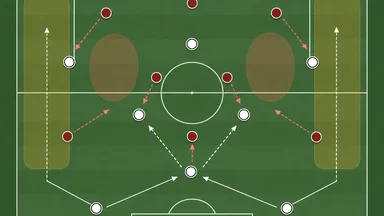
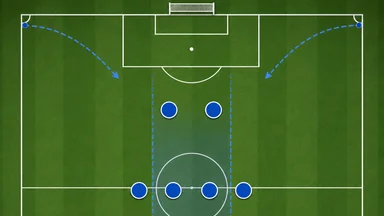
The structural gaps were not just about individual quality. South Korea had not evolved tactically since the 2018 World Cup, where they beat Germany but went out in the group stage. Bento's patient possession approach worked against weaker sides but struggled against elite pressing teams. The 4-1 defeat to Brazil was a symptom of a system that had plateaued. The federation understood that incremental improvements would not be enough; a fundamental expansion of the player pool was required.
K League becomes mandatory proving ground
In the two years after 2022, the K League underwent a quiet revolution. Ulsan Hyundai, which had won consecutive league titles in 2022 and 2023, became a development hub: by early 2026, five of its graduates were in the national team squad, including center-back Kim Min-jae's likely successor, a 22-year-old from Pohang Steelers who made his senior debut in 2024. Jeonbuk Hyundai Motors' academy produced two defenders who earned caps in 2025 friendlies. The league expansion from 12 to 14 teams in 2024 increased the number of professional clubs, creating more starting opportunities for young players.
The KFA introduced a domestic minutes requirement for national team call-ups: any player under 23 must have logged at least 1,500 minutes in the K League or an equivalent league over the previous 12 months to be eligible for senior selection. The rule, implemented in 2024, was controversial. Critics argued it could discourage young players from moving abroad early, while supporters noted it ensured a baseline of competitive match fitness. Early data suggests the policy has had mixed effects: the number of Under-23 players in the K League starting XIs rose by roughly 12% in 2025, but some promising talents, such as midfielder Bae Jun-ho, moved to Europe before meeting the threshold and were temporarily ineligible.
The domestic league also improved its scouting and coaching infrastructure. Ulsan hired a dedicated youth development coordinator in 2023, and Jeonbuk opened a new training center with six pitches. The results were visible in the national team's 2025 qualifying campaign: eight of the 23 players in the squad for the March 2026 matches had come through K League academies, compared to three in 2022. While the league still lags behind the J.League in producing technical midfielders, its defensive output has become more reliable. The average age of domestic-based call-ups dropped from 28.1 in 2022 to 25.4 by early 2026.
Perhaps the most telling sign of the K League's revival is that players no longer view it as a dead end. In 2022, most top prospects aimed to leave for Europe or China as soon as possible. By 2025, several players turned down mid-level European offers to stay in the K League for another season, reasoning that consistent playing time and exposure to the national team setup was more valuable than sitting on a bench in Belgium or the Netherlands. That shift in mindset, though fragile, has deepened the domestic talent pool.
European migration accelerates after 2022
If the K League provided a foundation, Europe became the accelerator. In the three transfer windows after the 2022 World Cup, seven South Korean players moved to Bundesliga clubs, including center-back Kim Min-jae's transfer from Napoli to Bayern Munich in 2023—a move that made him the most expensive Asian defender in history. Lee Kang-in joined Paris Saint-Germain from Mallorca in the same summer, while winger Yang Hyun-jun moved to Celtic in 2023 and established himself as a regular starter in the Scottish Premiership. By the 2024-25 season, three South Korean players were on loan in the Championship, gaining experience in English football's physical second tier.
The migration was not limited to traditional destinations. Agent networks expanded into Portugal and Belgium, where clubs such as Sporting CP, Club Brugge, and Gent signed South Korean prospects. Hong Hyun-seok, a midfielder who joined Gent in 2023, became a regular in the Belgian Pro League and earned a starting role in the national team by 2025. The Portuguese league attracted three Under-21 players between 2024 and 2026, including a left-back who debuted for the senior side in a friendly against Uruguay. The diversity of leagues exposed players to different tactical systems: German high pressing, English transitional play, and Portuguese possession-based patterns.
The numbers tell the story. In 2022, only three South Korean players were in Europe's top five leagues (Premier League, La Liga, Bundesliga, Serie A, Ligue 1). By March 2026, that number had grown to eight, with another five in the Championship, Eredivisie, or Belgian Pro League. The total number of South Koreans in UEFA-affiliated leagues rose from 18 in 2022 to 31 in 2026, according to KFA data. This expansion has a direct impact on national team depth: in the 2026 World Cup qualifying campaign, the squad typically included 14 Europe-based players, compared to seven in the 2022 cycle.
However, the European push has not been without trade-offs. Some players moved too early and struggled for minutes: a promising 20-year-old striker joined a Bundesliga club in 2024 but made only four substitute appearances in his first season, losing his place in the national team rotation. Others adapted well but faced cultural and linguistic barriers that slowed their development. The KFA responded by hiring a full-time liaison officer based in Frankfurt to support players and their families, a service that was not available in previous cycles. The officer's role includes monitoring playing time, coordinating with club coaches, and arranging language classes.
Positional surgery: midfield and full-back
The 2022 midfield was functional but limited. Jung Woo-young and Hwang In-beom provided energy but little creativity from deep, and Lee Jae-sung, though industrious, lacked the passing range to break defensive lines. Since 2022, the midfield has been systematically rebuilt. Paik Seung-ho, who had been a peripheral figure in 2022, emerged as a deep-lying playmaker after moving to the K League's Ulsan in 2023. His passing accuracy of 89% in the 2025 season, combined with an average of 4.2 progressive passes per 90 minutes, made him a regular starter. Hong Hyun-seok claimed the central midfield role at Gent and brought a physical presence that was missing in 2022—he wins roughly 58% of aerial duels, per league data.
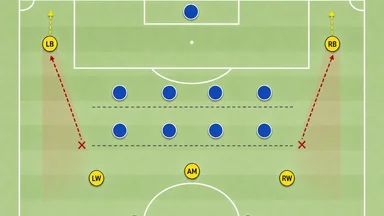
The full-back positions were an even more urgent concern. In 2022, left-back Kim Jin-su was 30 and right-back Kim Moon-hwan was 27; both were solid but offered little attacking thrust. By 2026, two younger right-backs had debuted in friendlies, including a 23-year-old from Jeonbuk who registered three assists in his first five caps. Left-back competition intensified between Kim Jin-su, now 34 but still a reliable defender, and Lee Ki-je, a 24-year-old who moved to the Championship in 2025. Lee's overlapping runs and crossing accuracy (34% completion in the 2025-26 season) have added a dimension that the 2022 team lacked.
The tactical impact of these changes is measurable. South Korea's xG from build-up play—defined as sequences of five or more passes ending in a shot—improved by 0.18 per 90 minutes between the 2022 World Cup and the 2025 qualifiers, according to Opta-derived data. That may seem modest, but it represents a meaningful shift from a team that relied on transitions and set pieces to one that can sustain possession in the opponent's half. The improvement is most visible against mid-tier opponents: in 2022, South Korea struggled to break down Iraq and Iran; in 2025, they averaged 2.1 goals per game against similar Asian opposition.
Still, the midfield rebuild is incomplete. Paik Seung-ho is 28 and has only 18 caps; he has yet to face a top-10 nation in a competitive match. Hong Hyun-seok is 25 but has limited experience against elite pressing systems. The defensive midfield position remains a question: no player has consistently replicated the ball-winning ability of a younger Jung Woo-young. The KFA has identified a 19-year-old in the K League who could fill that role by 2026, but he has not yet been capped. The midfield remains the area where South Korea is most vulnerable against top-tier opponents.
Son Heung-min succession plan takes shape
No single issue dominated post-2022 analysis more than the need to reduce dependence on Son Heung-min. In the 2022 World Cup, Son scored only one goal (a penalty) and created 0.8 chances per 90 minutes, well below his Tottenham averages. He was visibly fatigued after a season disrupted by a facial fracture, and opposing teams targeted him with double-teams. The succession plan that emerged had three strands: distribute leadership, develop alternative creators, and lower Son's minutes load in qualifiers.
Captaincy rotation was tested during the 2023 Asian Cup, where Son was rested for group-stage matches and the armband passed to Hwang Hee-chan and Kim Min-jae. The experiment was considered a success: Hwang scored two penalties in Son's absence, and the team maintained a 67% win rate without its captain. By 2025, a leadership group of four Europe-based players—Son, Hwang, Kim Min-jae, and Lee Kang-in—met monthly via video conference to discuss tactics and squad morale. This distributed responsibility reduced the psychological burden on Son, who told reporters in 2025 that he felt "less alone" in carrying the team.
On the pitch, Hwang Hee-chan stepped up as a secondary penalty taker and set-piece option. Um Won-sang, a winger who earned 12 caps by March 2026, emerged as a direct replacement on the left flank, with similar dribbling patterns (2.1 completed dribbles per 90) but a higher cross completion rate (36% vs. Son's 29% in the same period). Two Under-23 players, Seol Young-woo and Bae Jun-ho, were integrated into the squad in 2025, providing cover across the front line. By the 2026 qualifiers, Son started only 60% of matches, compared to 85% in the 2022 cycle.
The succession plan is not without risk. Hwang Hee-chan, while effective, is not a natural creator; his goals come from late runs and counter-attacks rather than build-up play. Lee Kang-in, the most technically gifted option, has been inconsistent at international level: he has four goals and six assists in 28 caps, but his defensive work rate has drawn criticism from some coaches. And the Under-23 pair have only 15 caps between them, raising questions about their readiness for a World Cup knockout match. The plan is a work in progress, but the direction is clear: South Korea in 2026 will be less Son-centric than the 2022 version.
Jurgen Klinsmann's tenure and its legacy
The overhaul was overseen by two head coaches, but Jurgen Klinsmann's appointment in February 2023 marked a clear break. Klinsmann, who had previously managed Germany and the United States, brought a reputation for developing young talent and a willingness to challenge the KFA's conservative selection patterns. Over 21 matches, his win rate stood at 52%—lower than Bento's 58% but achieved with a significantly younger squad. The average age of his starting XIs dropped from 28.7 in 2022 to 26.1 by the end of 2025, the lowest for South Korea since the 2014 World Cup cycle.
Klinsmann's most lasting contribution was expanding the scouting network. He pushed the KFA to hire scouts based in South America, a region that had been neglected by previous regimes. By 2025, South Korea had identified and called up two naturalized Brazilian-born players—a midfielder and a full-back—who had acquired Korean citizenship through residency. The move was controversial among fans who preferred homegrown talent, but both players contributed to qualifying wins. Klinsmann also implemented a team-wide fitness data tracking system using GPS vests and heart-rate monitors, a practice that became standard in the K League after his tenure.
However, Klinsmann's tenure was not universally praised. His tactical flexibility sometimes bordered on inconsistency: he used three different formations in the 2023 Asian Cup, and the team's defensive record worsened, conceding 1.3 goals per game compared to 0.9 under Bento. He was criticized for favoring Europe-based players at the expense of K League regulars, though the data shows that domestic-based players received roughly the same proportion of call-ups as under Bento. After Klinsmann left in early 2025 to take a club role in Europe, his successor, a former K League coach, maintained most of his structural changes while tightening the defensive organization.
The legacy of the Klinsmann era is a squad that is deeper, younger, and more internationally experienced than at any point in South Korean history. But it is also a squad that has yet to prove it can beat a top-10 nation in a competitive match. The 2026 World Cup will provide that test. Whether Klinsmann's reforms prove to be a foundation for a deep run or a temporary bump in a longer cycle will depend on how the new generation handles the pressure of a tournament environment.
2026 starting XI projection shows new depth
A projected starting XI for South Korea's first 2026 World Cup match illustrates the transformation. In goal, Kim Seung-gyu remains the likely starter at 35, but two younger options—one based in the J.League and one in the K League—have earned caps. The center-back pairing of Kim Min-jae and Kim Young-gwon, now 35, is experienced but aging; a 22-year-old from Pohang is expected to take over by the knockout stages. The full-backs are likely to be Lee Ki-je on the left and a 23-year-old from Jeonbuk on the right, both of whom debuted after 2022.
In midfield, Paik Seung-ho and Hong Hyun-seok are the most probable starters, with Hwang In-beom providing depth. The attack features Lee Kang-in on the right, Hwang Hee-chan on the left, and Cho Gue-sung as the target forward. Son Heung-min is likely to start—he remains the team's best player—but his minutes may be managed, with Um Won-sang and Bae Jun-ho ready to substitute. The bench is expected to include eight Europe-based players, a dramatic increase from 2022. In the 2025 qualifiers, South Korea had nine different goal scorers, indicating a more distributed attack.
Depth, however, does not guarantee success. The midfield pairing of Paek and Hong has only 11 competitive starts together. The full-backs are inexperienced at tournament level. And the center-back succession remains a concern: Kim Min-jae is world-class, but his partner, whether Kim Young-gwon or a younger player, has not faced the kind of elite strikers South Korea will encounter in 2026. The team's xG build-up improvement is real but has been measured primarily against Asian opposition; against European and South American teams in friendlies, the numbers regress toward 2022 levels. For example, in a 2025 friendly against Portugal, South Korea managed only 0.6 xG from open play, suggesting that the tactical improvements may not yet translate against the highest-caliber opponents.
South Korea enters the 2026 World Cup with a broader player pool than it has ever had, a succession plan for its talisman, and a tactical framework that is more flexible than the rigid possession system of 2022. Yet the overhaul remains incomplete: the midfield creativity gap persists, the full-back positions are unproven at the highest level, and the center-back succession plan relies on a player with only five caps. The round-of-16 exit four years ago forced a reckoning, but whether that reckoning produces a first quarterfinal appearance since 2010 depends on factors beyond depth alone—including the group stage draw, injury luck, and the ability of the new generation to handle knockout pressure. The squad is deeper, but the margin for error against top-tier opposition remains thin.